

Empatheme
English Ear° Trail®
— For Japanese English Learners —
You can’t say it.
You can’t hear it.
Why?
Your native rhythm interferes.
Make it visible.
English Ear° Trail is a system that captures your voice and behavior in real time through daily practice,
transforming them into a visible and usable form to eliminate bottlenecks.

“English Ear° Trail 1” is free!
To celebrate the release of English Ear° Trail,
we’re offering in-app practice for free for a limited time!
Don’t miss this opportunity.


“English Ear° Trail 1” is free!
To celebrate the release of English Ear° Trail,
we’re offering in-app practice for free for a limited time!
Don’t miss this opportunity.
PICK UP





Empatheme was featured in an article on ICT Education News.

Empatheme was featured in an article on VOIX edu.
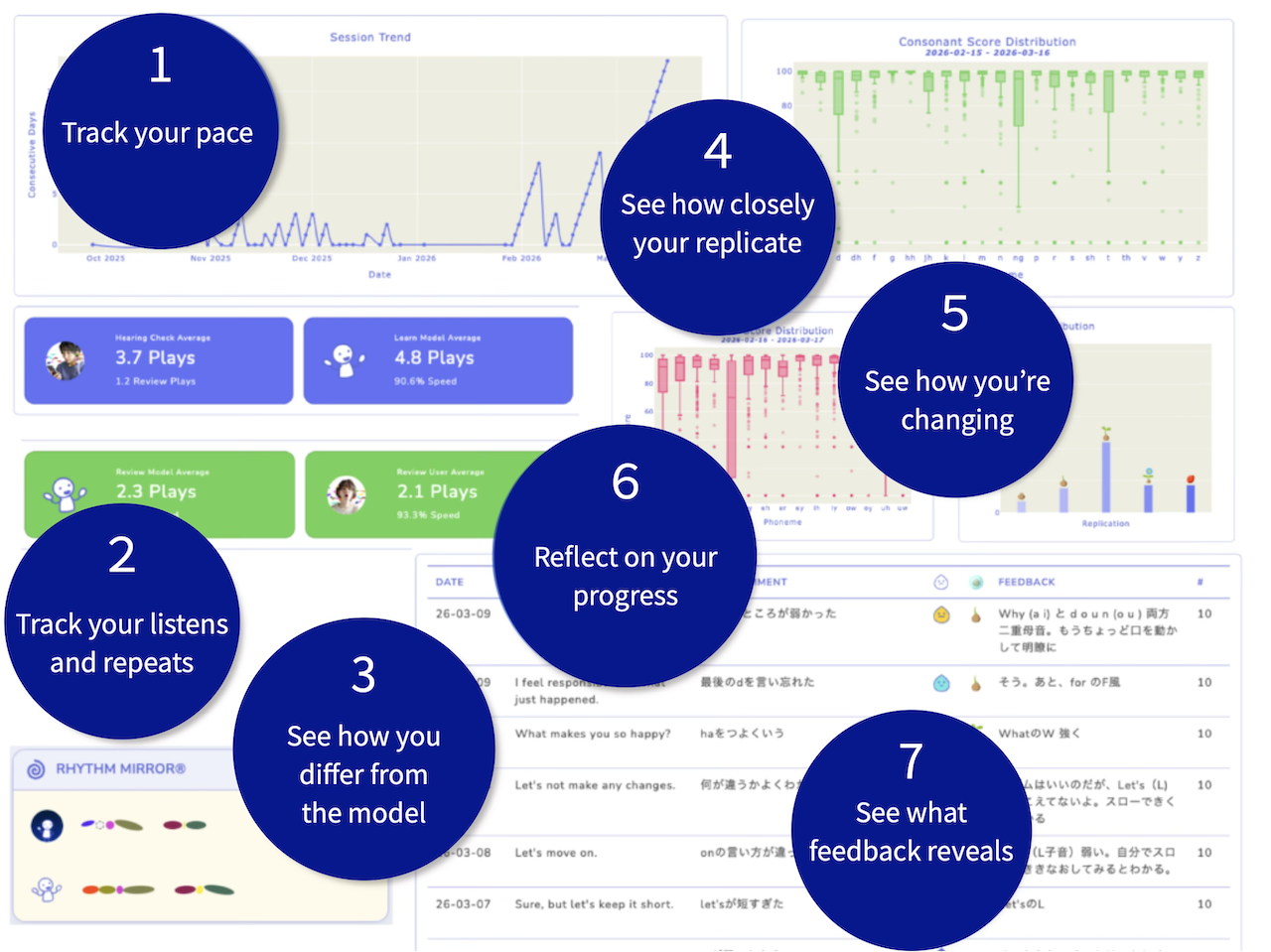
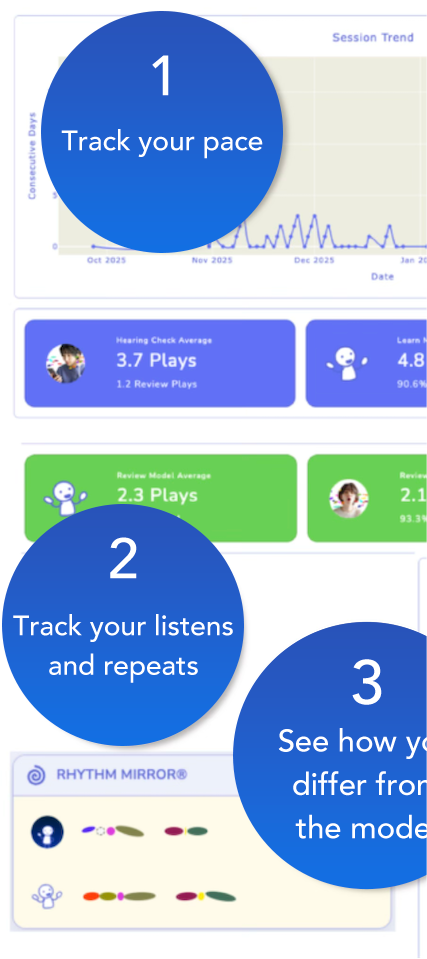
Not just the results,
but how you practice.
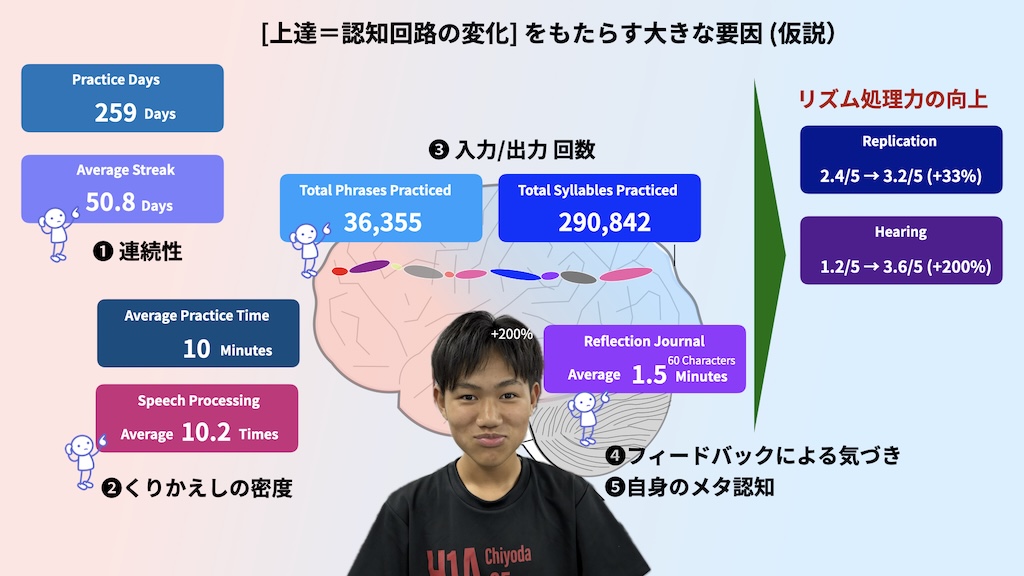
The whole process becomes data.
So you can see
what drives change.
If you continue practicing for 15 minutes every day for a month,
you will begin to see a trajectory of change and future growth.
“Your Native Ear”
You already have a powerful sound circuit in your brain.
That’s your native ear.
The sounds and rhythms of your language have been shaped since before birth, and are deeply embedded in your brain.
This circuit lets you hear and speak.
But when you process English, your brain uses this same native circuit.
As a result, English sounds and rhythms are reproduced in your native — in your Japanese Ear.
You miss sounds.
Your mouth won’t keep up.
There is only one reason.
It’s not that English is difficult.
It’s that your native circuit holds you back.
The Invisible “Bottleneck”
The problem is that you can’t see this circuit.
How you speak.
How you listen.
Without seeing it,
you can’t tell what is off
or what to fix.
This is the biggest bottleneck.
There is only one reason.
It’s not that English is difficult.
It’s that your native circuit holds you back.
Three Mirrors and EmpaJournal — Our patented technology
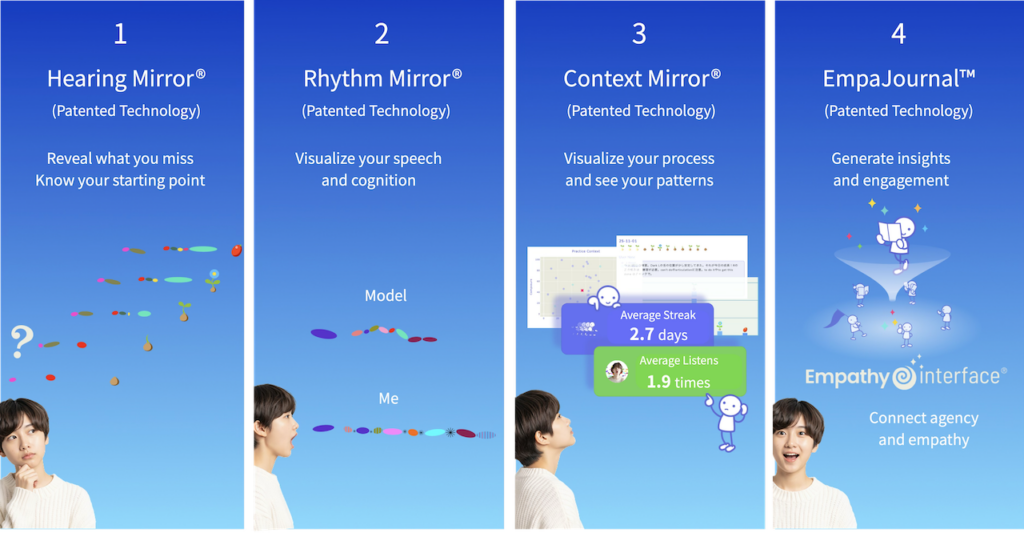
The English Ear° Trail makes this invisible bottleneck visible through the three mirrors.
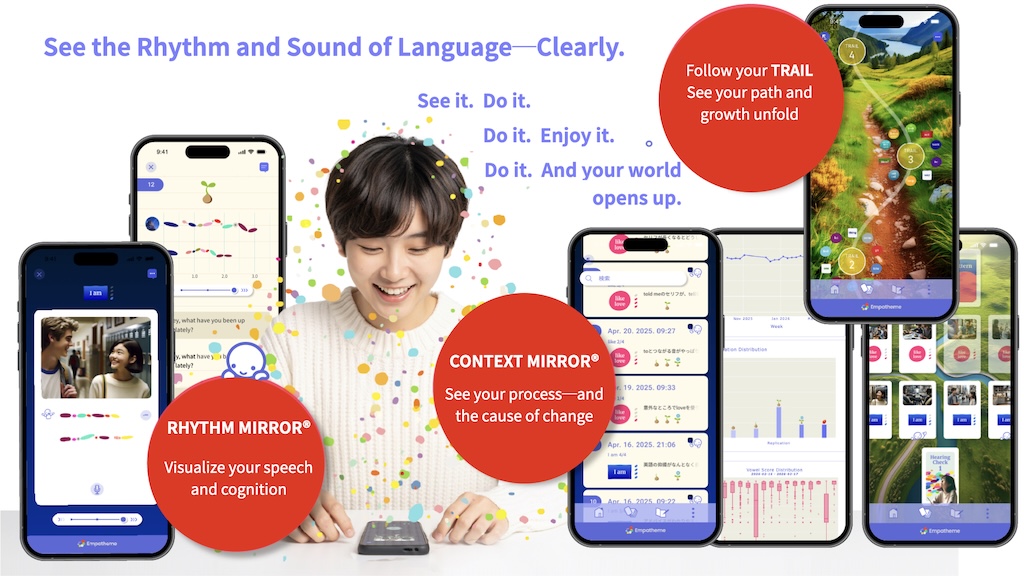
⚫︎ Hearing Mirror® reveals what you miss.
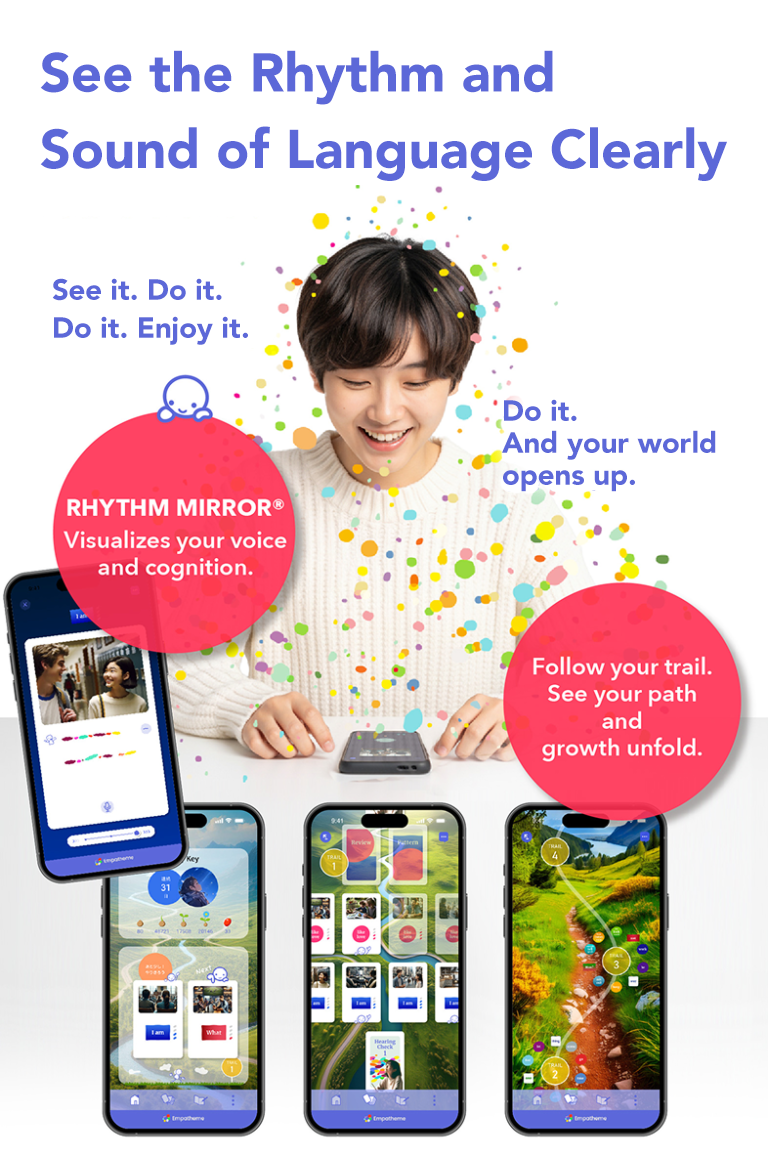
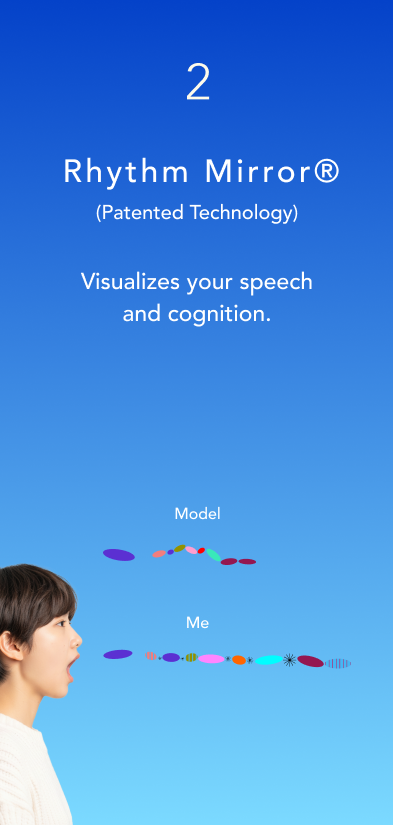
⚫︎ Rhythm Mirror® visualizes your speech and cognition.
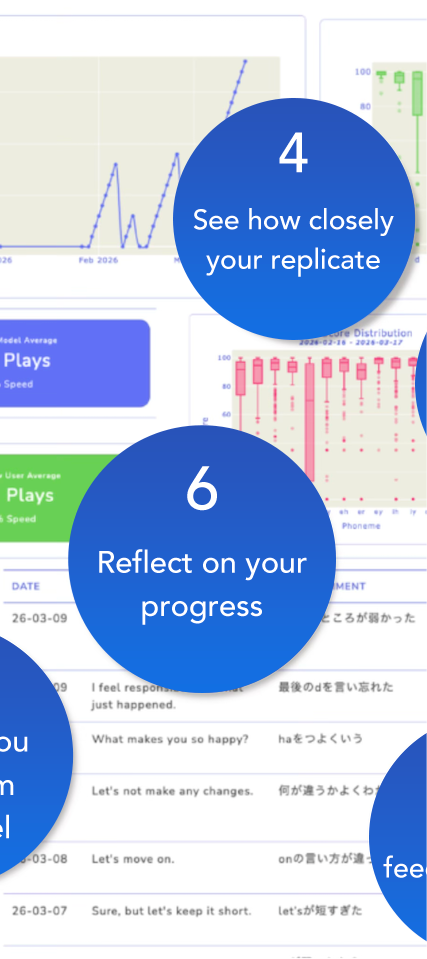
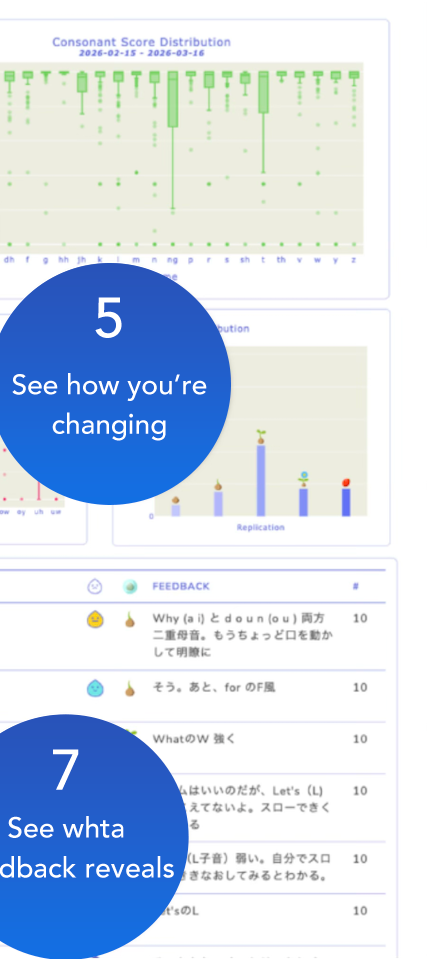
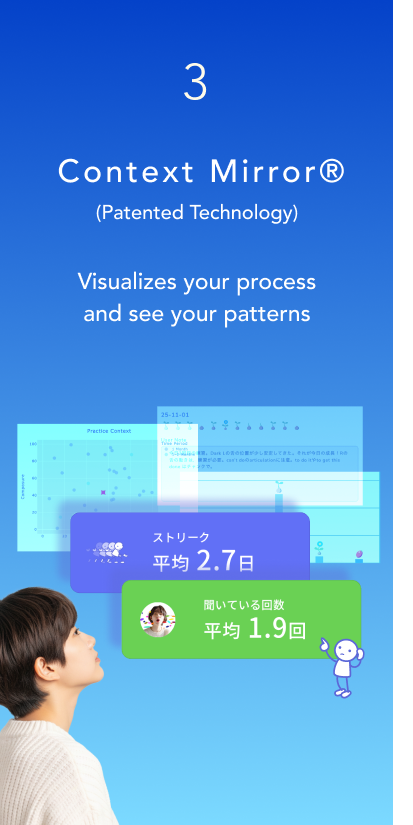
⚫︎ Context Mirror® shows how you practice and how you change.
⚫︎ EmpaJournal® records your practice and turn into your data and connects you through Empathy Interface®.


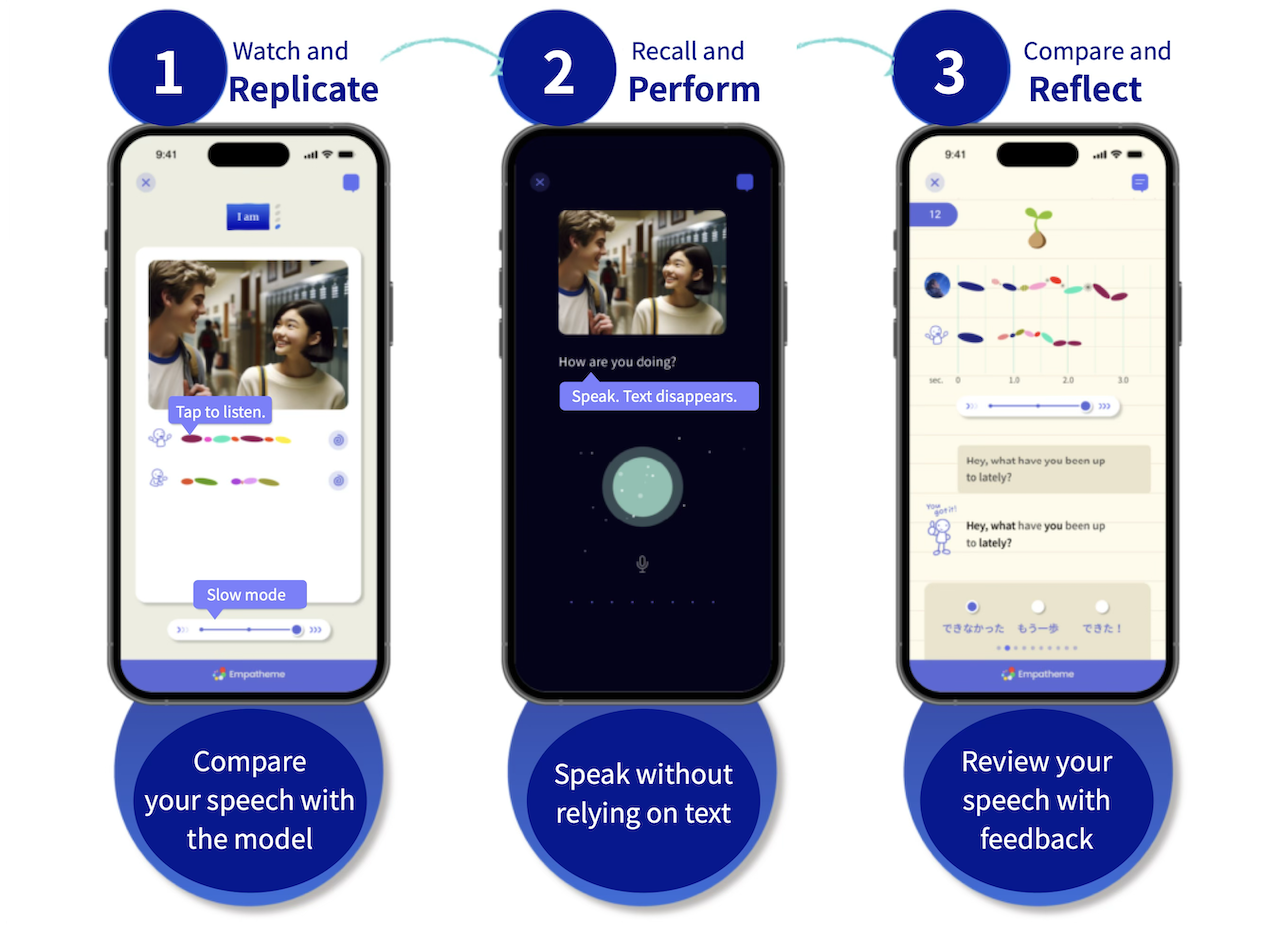
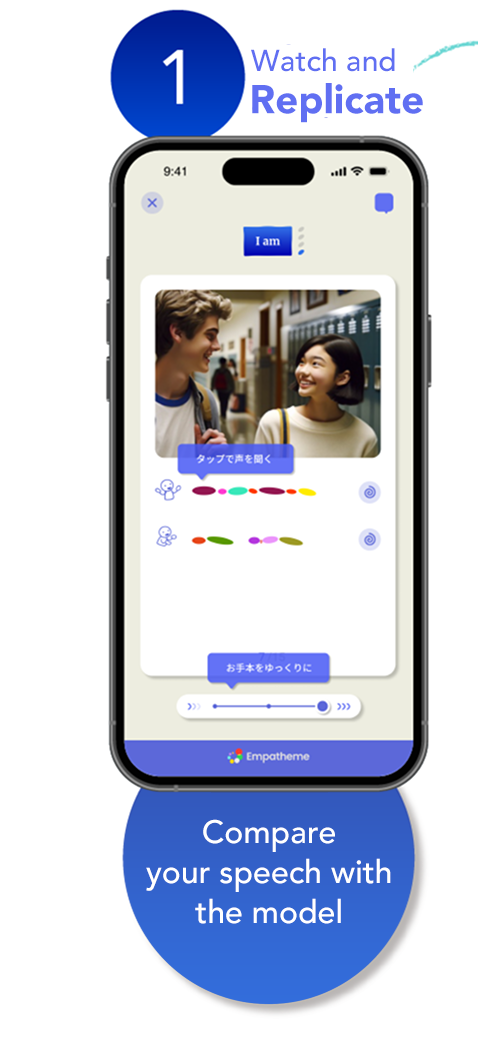
❶ Watch and Replicate — Notice the difference from the model
Reproduce both the model voice and your own voice using the Rhythm Mirror®.
Replicate line by line and check where you differ—your gaps and your own habits.
You also practice slow shadowing, aligning your voice with the model,
and gradually build accurate sound and rhythm.
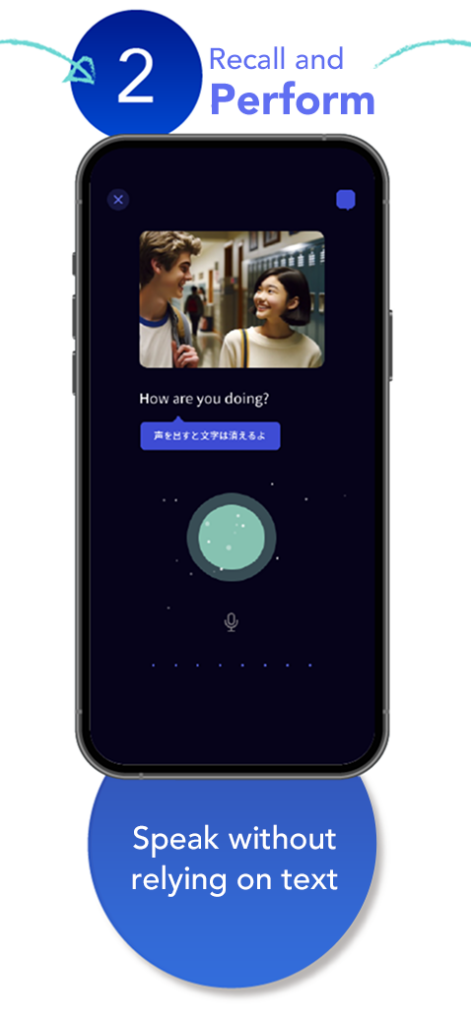
❷ Recall and Perform — Speak without relying on text
When you look at text, your native circuit takes over.
English sounds and rhythms shift into your native patterns, and your own habits appear.
Instead, recall the line without relying on text.
Imagine the scene, and speak as if addressing someone.
Recall the model voice and perform it.
This is how sound and rhythm are engraved in your brain.
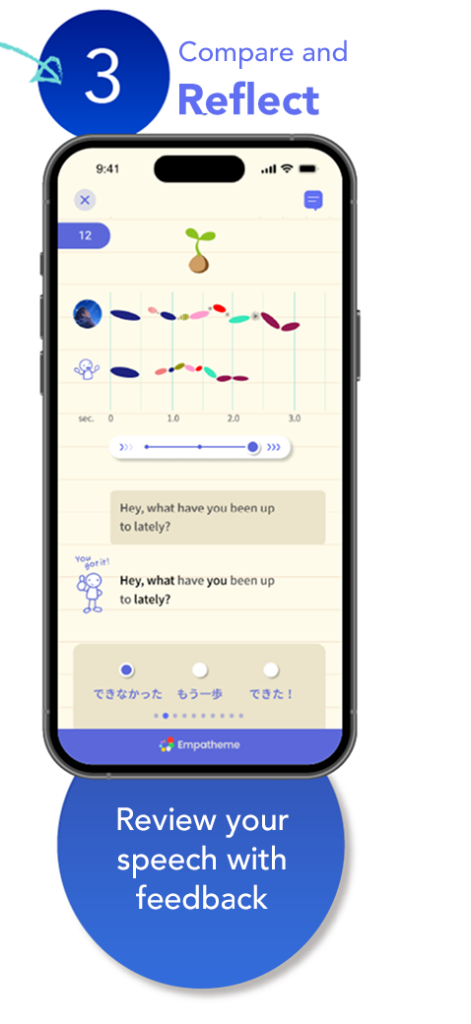
❸ Compare and Reflect — Reflect and write in your Journal
Your voice becomes your practice data.
Compare your voice with the model—see, listen, and check.
Then reflect on how you actually speak,
and where you differ,
and write it down.
It’s not that you notice and then write.
You notice because you write.
By writing briefly, you build awareness (metacognition),
and this becomes your personal practice data.
Based on this data, you can receive guidance and encouragement tailored to you.
Your Brain Can Change
Your brain has the ability to rewire its own neural circuits.
This is called neuroplasticity — a mechanism that is always at work when you learn.
But it does not happen automatically.
If interference from your native circuit — seen in text dependency and katakana-based processing — remains unnoticed, it blocks the formation of new circuits.
What matters is repeated cycles of practice that cross a threshold — the point where change begins.
Once you cross that line, new neural connections for English sound and rhythm start to form and grow stronger with practice.
15 Minutes a Day — Like brushing your teeth
What you need is not something difficult.
Just 15 minutes a day of using your voice.
Like brushing your teeth — once you stand in front of the mirror, it begins naturally.
As you cultivate your voice, your brain circuits gradually change.
English Ear° Trail makes this process visible through the Rhythm Mirror® and Context Mirror®.
You can see your circuits changing with your own eyes.
It also creates a practice loop that supports awareness → correction → replication
This loop drives the formation of new sound circuits.
Your Voice Grows — Like seeds you plant
Like planting seeds, you build your voice over time.
English Ear° Trail is an environment and tool that supports your daily practice.
As your unlearn old patterns and reshape your voice, the change becomes visible — like flowers and fruit growing.
When you can do it, it becomes fun.
And as your voice changes, your world opens up.
“English Ear° Trail 1” is free!
To celebrate the release of English Ear° Trail,
we’re offering in-app practice for free for a limited time!
Don’t miss this opportunity.
“English Ear° Trail 1” is free!
To celebrate the release of English Ear° Trail,
we’re offering in-app practice for free for a limited time!
Don’t miss this opportunity.