
English Ear° Trail
for Educators
For Educators and Instructors
Building on Empatheme, Empathy Interface, and Empallet,
we connect learners’ practice with the support of educators.
We work together with schools, instructors, and learning communities through educational partnerships, collaboration, and inquiry-based co-creation.
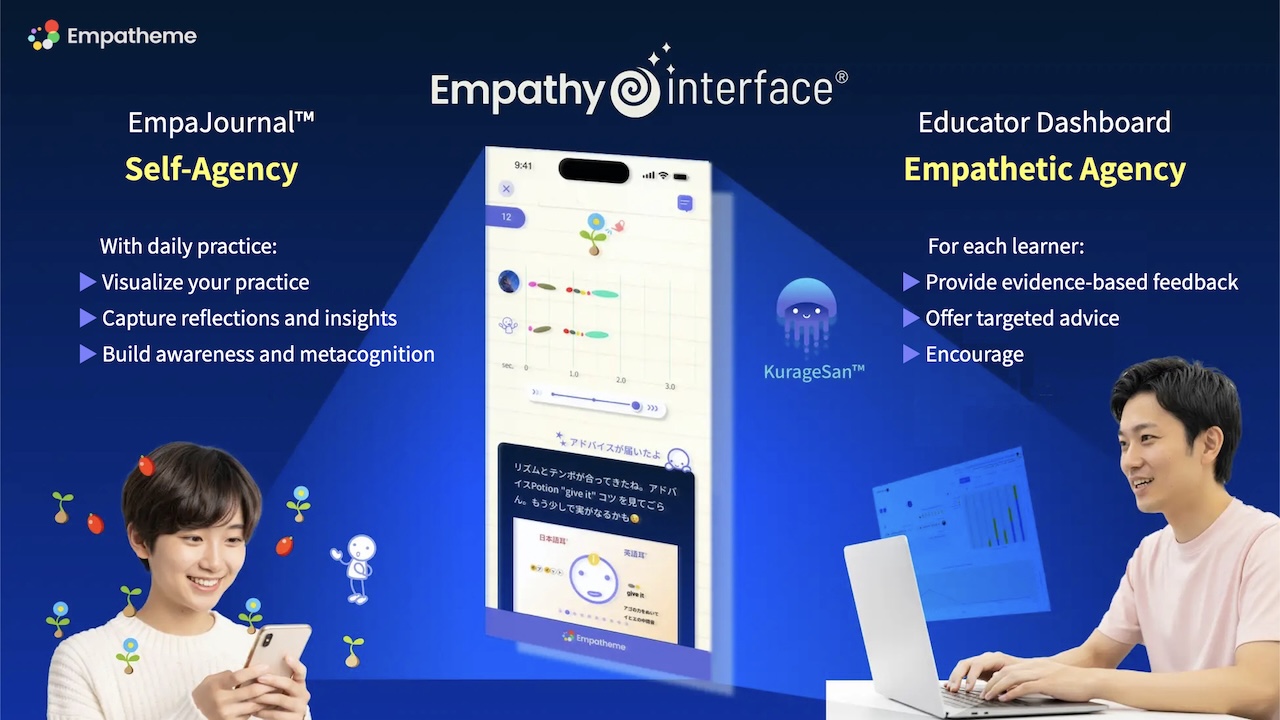
Connecting each learner’s self-agency with your empathy──Empathy🌀Interface®
The English Ear° Trail app and the Educator Dashboard are connected through Empathy🌀Interface®.
When the learner’s practice space, EmpaJournal™, is connected with a dashboard that watches over and supports them, a place for co-creation emerges.
With English Ear° Trail,
learners practice.
As you see their changes,
you can stay close and encourage them.
Learners plant “seeds of lines” and grow the Seeds reflected in Rhythm Mirror®. You can stay close to that practice and encourage their progress.
A dashboard that lets you see change and stay close
It supports many kinds of educators—instructors, teachers, coaches, schools, and a wide range of teaching styles.
It can be used in schools, from elementary school through university, as a complement to classes and teaching materials, and as a system that supports learners’ independent practice. You can use it alongside your own materials and give advice based on explanations and real examples.
No special experience is required. The necessary information is made visible on the dashboard. By staying close and encouraging learners while seeing their changes, learning can move forward in a meaningful way.
We are beginning by offering this for educators who support multiple learners, and a personal view for individual practice will be introduced soon.
Key Features and Technologies
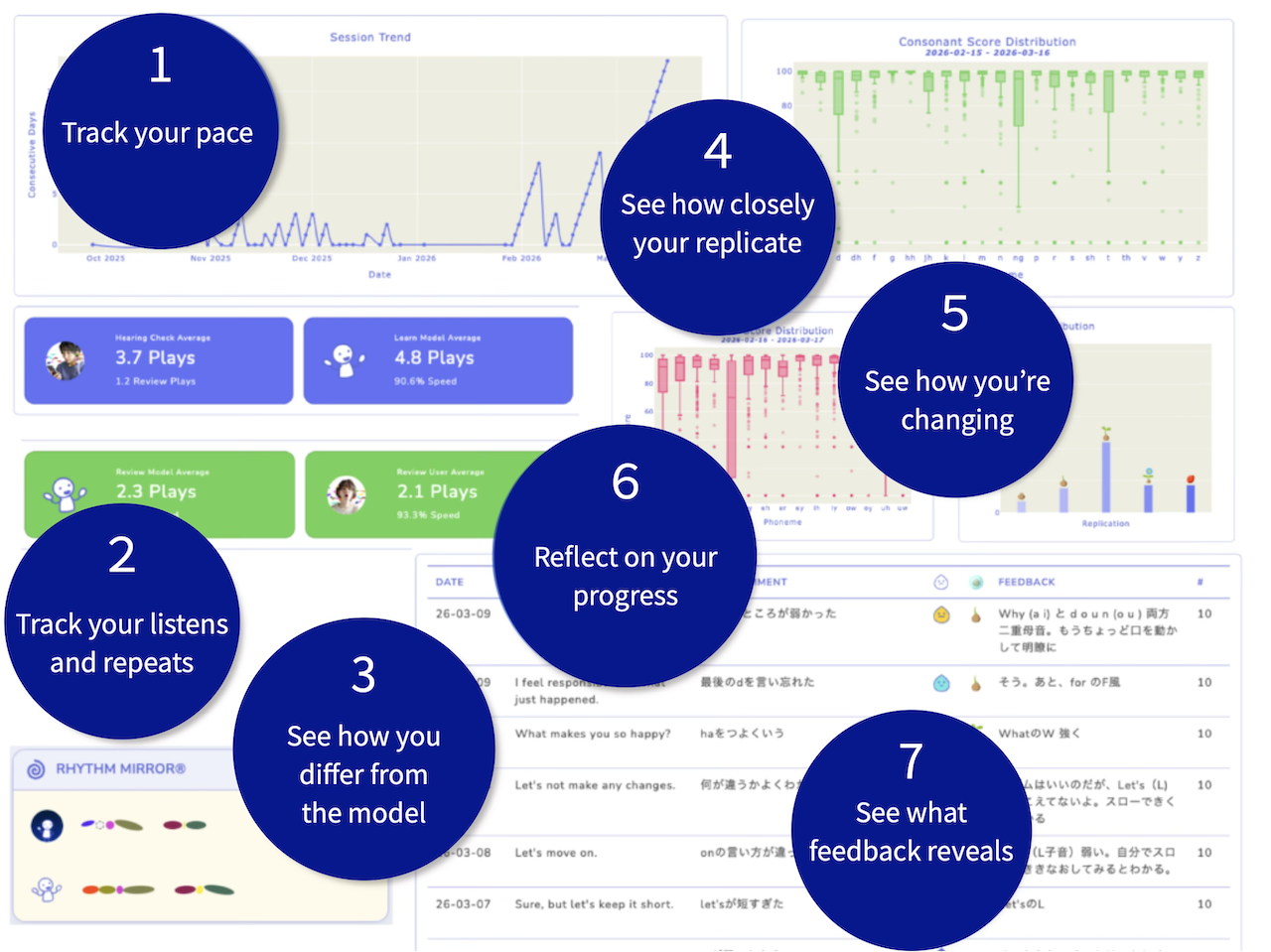
1. Visualizing Practice
See the whole picture of practice at a glance—flow, attitude, context, frequency, quality, continuity, and change.
Empathetic AI “KurageSan®” summarizes the key points.
2. Visualizing Cognition
Understand the learner’s sound, rhythm, phrasing, intonation, and pronunciation—from summary to detail.
Together with the learner’s self-observation and reflection, even invisible changes become visible.
3. Visualizing Communication
Support learners through invitations, guidance, prompts, encouragement, and care linked to their journals.
Rhythm Mirror® displays, audio playback, advice, and messages are brought together.
Invite ▶ Guide ▶ Prompt ▶ Encourage ▶ Support
The “Growing Seeds” home screen shows a real example of practice by Rei, a first-year high school student.
See how he changes through his own effort, and grows further through hints and encouragement from his tutor.
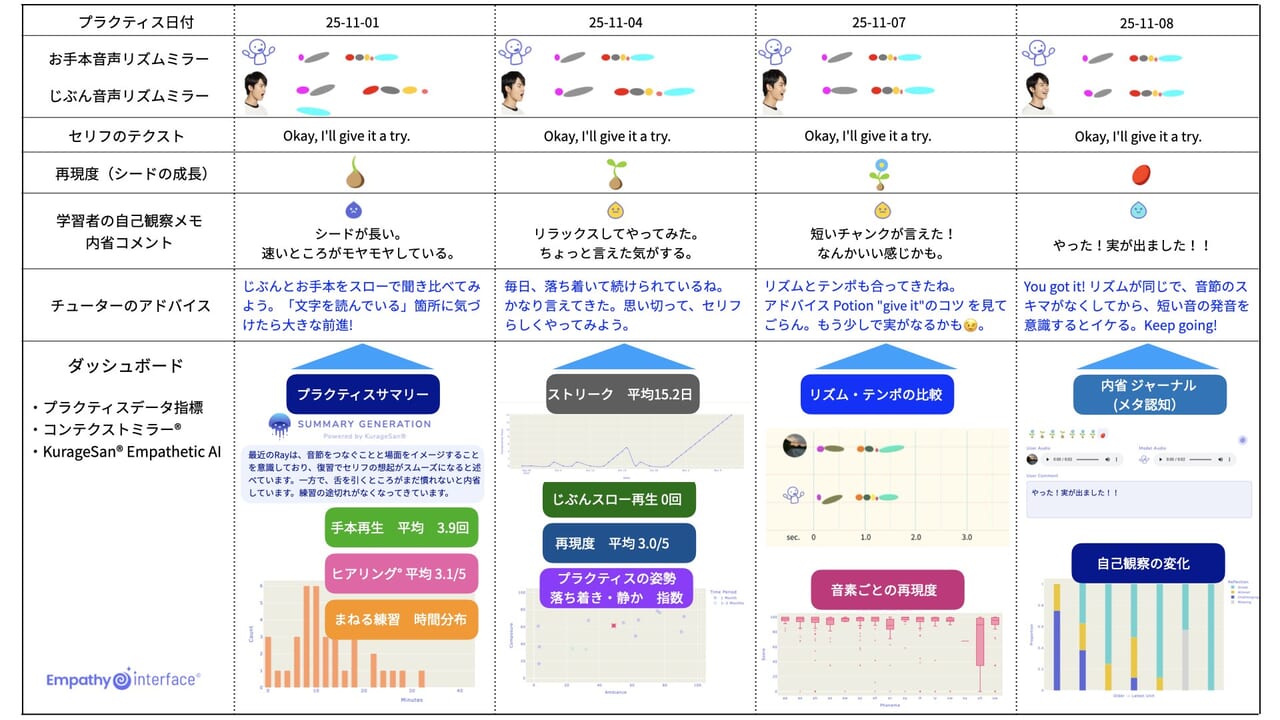
Invite — Beginning with a first awareness
Lines that are hard to say can make anyone a little tense. By looking at the flow of practice, you can begin with one comment that helps awareness take root.
Guide — Settle down and voice it
Once the flow becomes steady, look back at the changes so far and offer just one next point. A comment that makes the path visible becomes the energy to move forward.
Prompt — Encourage the next challenge
Once the basics are taking shape, invite a small challenge beyond the threshold. A gentle word of encouragement is enough.
Encourage — Share the joy
Once the learner gets into rhythm, share the joy of the results. More than evaluation, rejoicing together becomes a source of strength.
You can watch this process in “Staying Close to Rei as He Grows His Seeds” (documentary video).
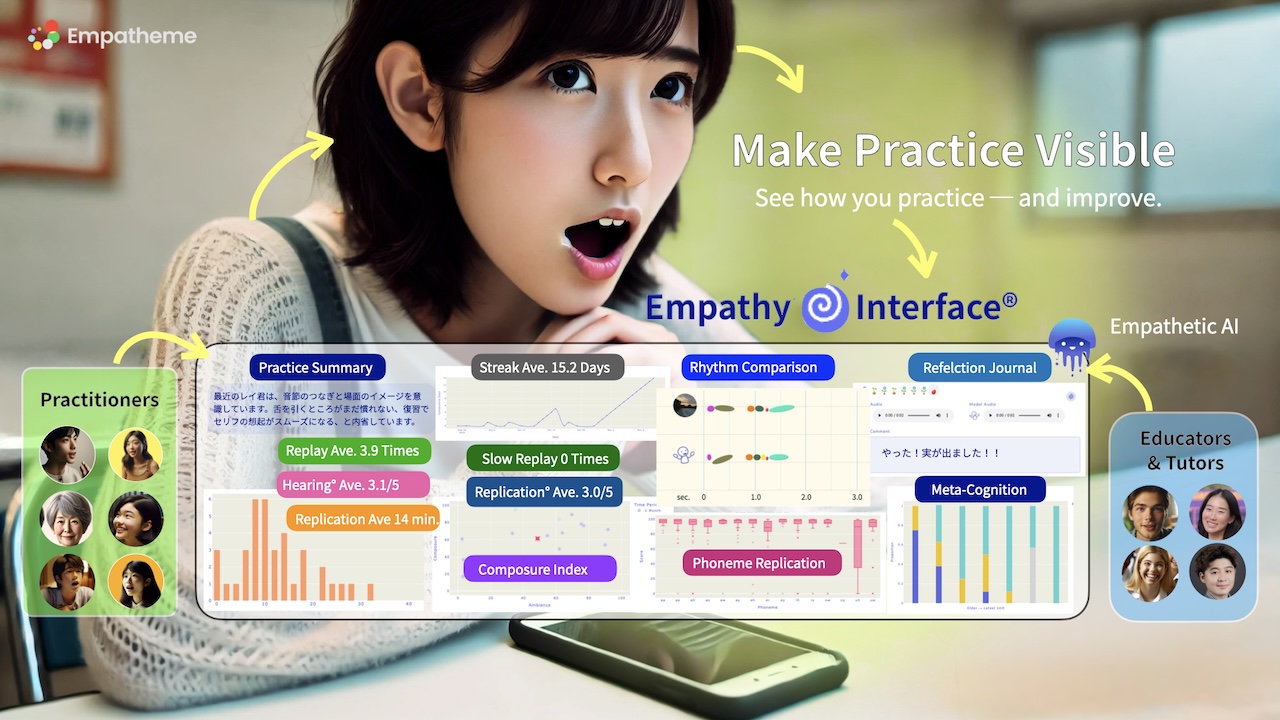
Visualizing Cognition and Practice
To listen is to reproduce sound in the brain.
To speak is to retrieve that reproduction and give it voice.
Listening and speaking are two sides of the same invisible cognitive process.
That is why learners cannot see themselves practicing.
How are they hearing the sound right now? How are they voicing it?
They move forward without seeing the gaps or the changes.
Those changes are invisible to educators, too.
Language happens inside: in the brain’s cognition and the movements of the mouth.
“They cannot do it the way they were taught.”
“They practice, but nothing seems to change.”
There is one reason: the practice itself was not visible.
Empathy🌀Interface® visualizes learners’ invisible cognition and the whole of their practice.
AI does not teach in your place.
AI supports the learner’s self-agency and your capacity for empathy.
Your human presence is irreplaceable.
As a real example of co-creation between a learner and an educator, please watch “Nao’s 100-Day Journey” (documentary).
↓Let’s watch the video!↓
Fifteen minutes every day, like brushing your teeth.
Invite and encourage that practice.
Change will surely appear.
Improvement is not about adding more knowledge; it is about changing one’s cognitive circuits.
For fifteen minutes each day, as learners let go of self-taught habits, cognition fixed to Japanese sounds and rhythms gradually loosens.
Because the accumulation of small “subtractions” becomes visible, it eventually grows into a major change.
The moment when Seeds begin to grow in your students—
we invite you to experience that joy and delight.
Try it with Rhythm Mirror®!
Will your Seed begin to sprout?

Empatheme® English Ear° Trail® App